Hymn of the Hunted
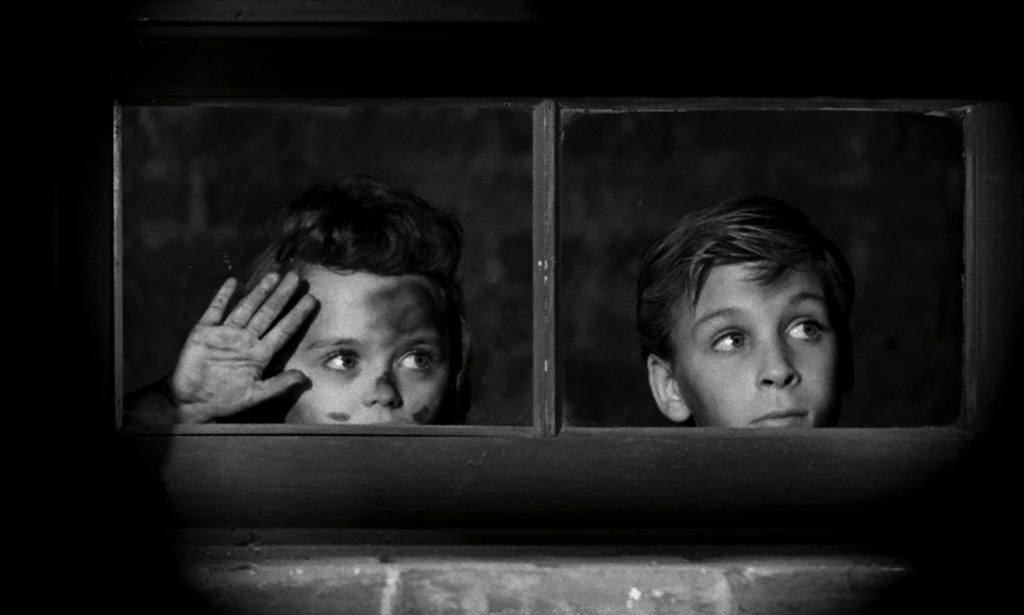
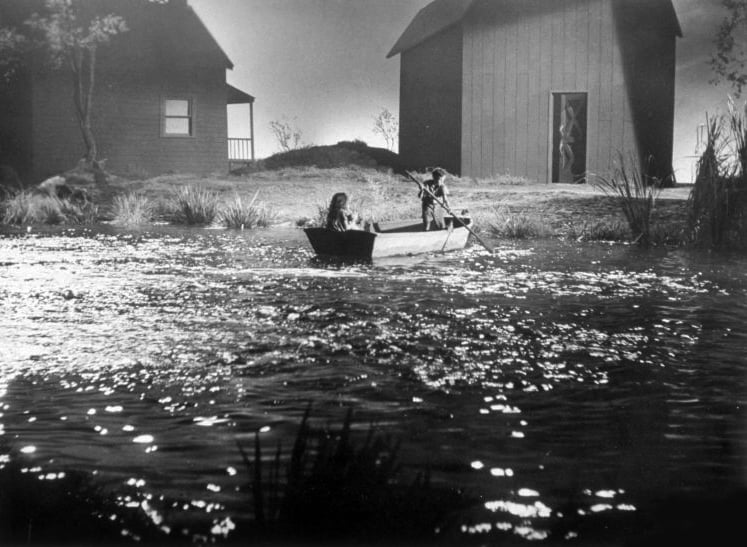
This is a movie I think about without warning. Parts of it are ingrained in my mind and surface from time to time, like a personal memory. The underwater scene with Shelley Winters stands out as otherworldly beautiful. The silhouette of Robert Mitchum’s false preacher against the night sky is a sign of evil come to roost. The children’s haunting river journey, as they flee his murderous pursuit, is chilling. These images visit me unexpectedly; their eeriness undimmed by time.
I often wonder what other movies Charles Laughton would have made if people at the time had appreciated this film. I would have loved to watch his directorial vision grow and evolve over time. I’m sad for all the stories he didn’t get to tell and the ones we didn’t get to experience. That we only have this single, perfect nightmare-fairy tale from him is another one of cinema’s great tragedies.
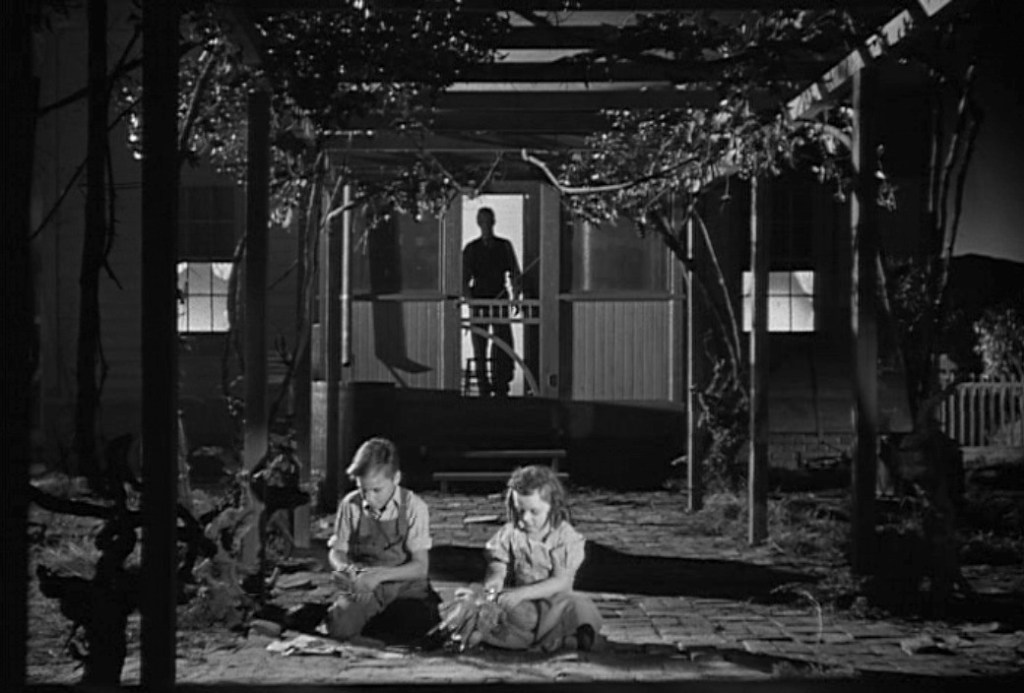
The film tells the story of two children escaping a stepfather who uses religion to twist faith into something cruel in his search for stolen money. Eventually, they find protection with a woman played by Lillian Gish, whose quiet, unwavering belief offers a powerful counterpoint. That tension, between false piety and genuine faith, is central to what makes Laughton’s film so memorable.
The film inhabits a liminal space between horror, folk tale, and Southern Gothic. Simultaneously stylized with its German expressionist shadows, yet emotionally raw in its portrayal of childhood terror.
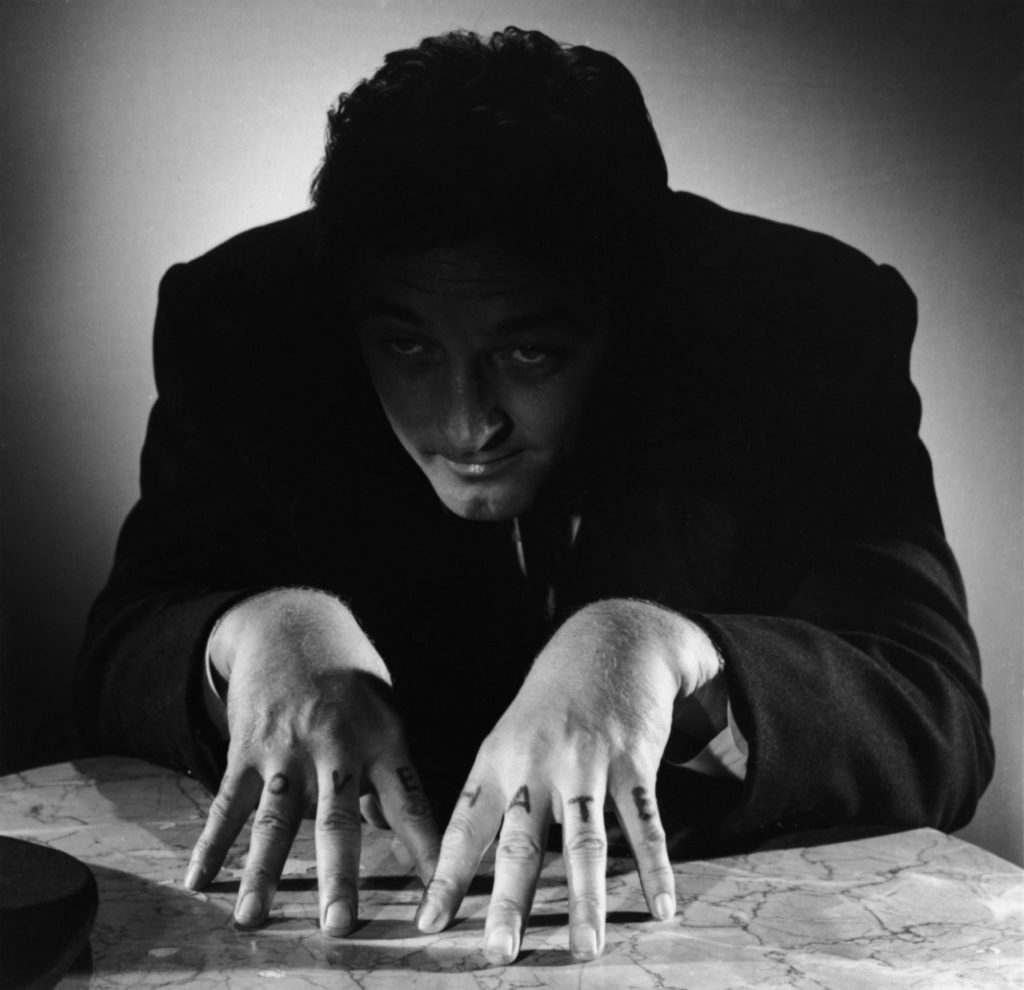
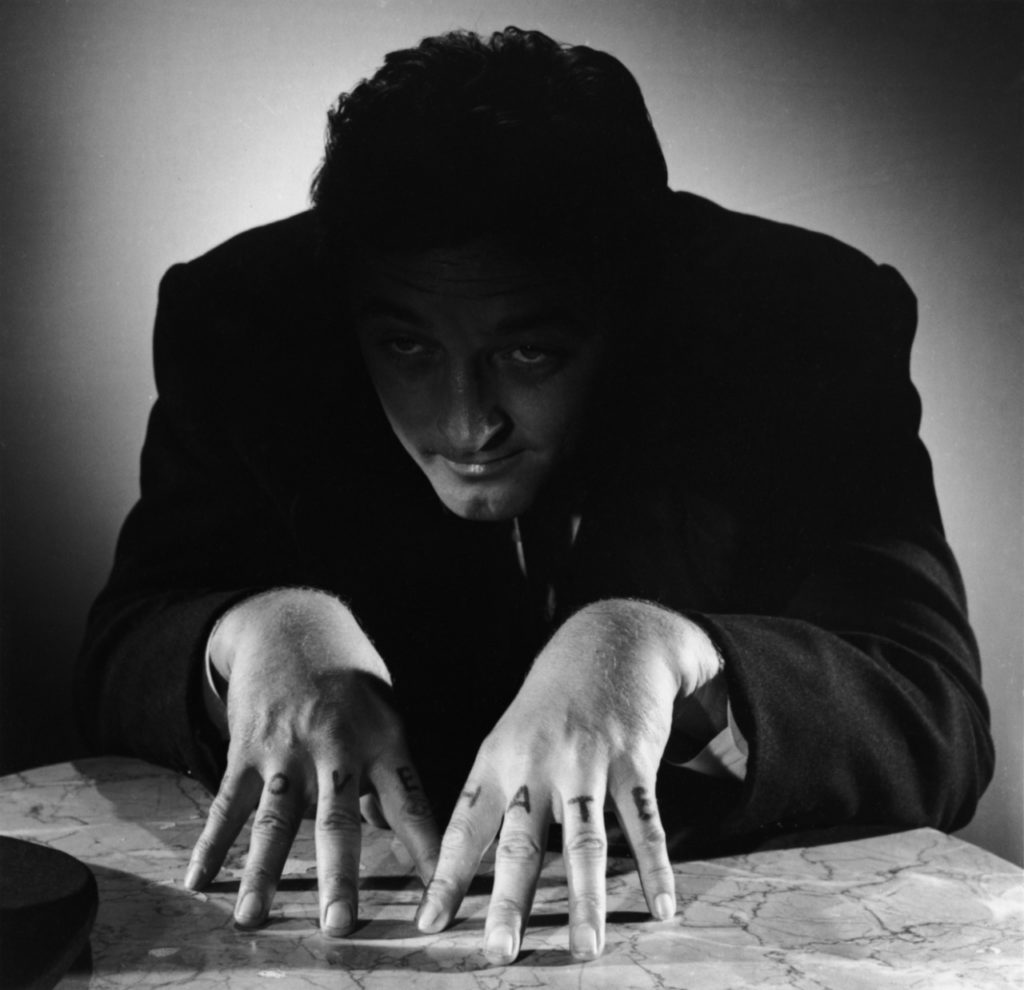
Mitchum’s preacher remains one of cinema’s most unsettling villains. He wears his menace on his knuckles, literally tattooed with “LOVE” and “HATE,” but cloaks it in religious righteousness. Laughton understood something profound about America: how faith and violence are often intertwined, and how children are left vulnerable in a world where adults fail them.
What makes the film’s initial commercial failure even more heartbreaking is how clearly Laughton understood what he was doing. The budget was close to $800,000, but it didn’t make that back, only around $589,000 in domestic rentals, and reviews at the time were mixed at best. Some found it too weird, too theatrical, too hard to pin down. Others dismissed it outright. Laughton never directed again.
It’s hard not to feel a sense of loss knowing that the same qualities that make the film special are what pushed people away. The Night of the Hunter doesn’t look or move like anything else from the 1950s. It doesn’t follow the usual rules. It leans into shadows and silence, into archetypes and half-remembered childhood fears. That makes it harder to categorize, but also harder to forget. It feels suspended in time: as much a fairy tale as a thriller, as much a parable as a horror film.
Over the decades, it’s become something of a reclaimed treasure. It’s been added to the National Film Registry, climbed “greatest of all time” lists, and earned praise from critics who now recognize what Laughton built: not just a film, but a world. One that feels both deeply personal and oddly universal; the kind of story that leaves something behind, whether you understand it all or not.
And maybe that’s what makes it timeless. It was misunderstood when it came out, but it stayed. It waited.
Even after all these years, that haunting voice singing “Leaning on the Everlasting Arms” still follows me, just as it followed those children down the river.
 Reed Writes
Leave a comment